
StoryToon: Manhwa, Manga Comic
SHOPPERBEATSComics
3.74.00 Reviews
- Version
- 1.0.2
- Installs
- 100.00K
- Age Rating
- Everyone
Screenshots
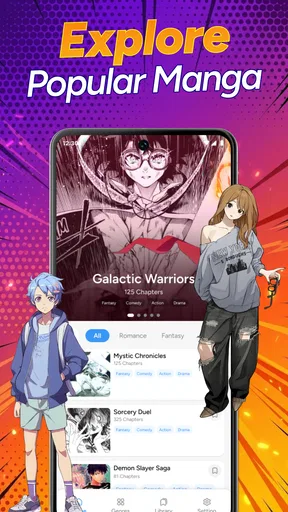
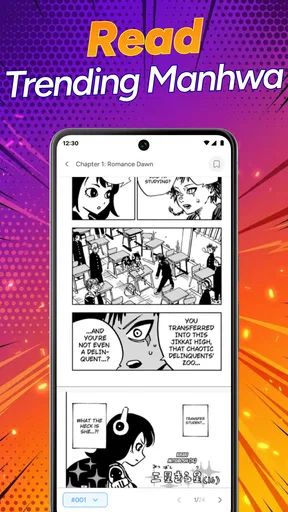
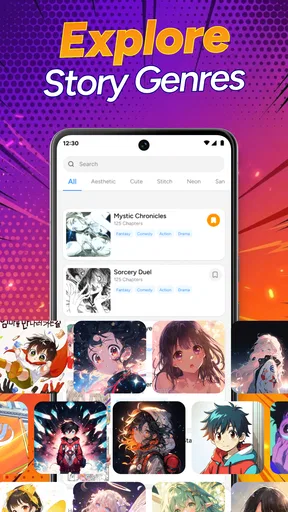
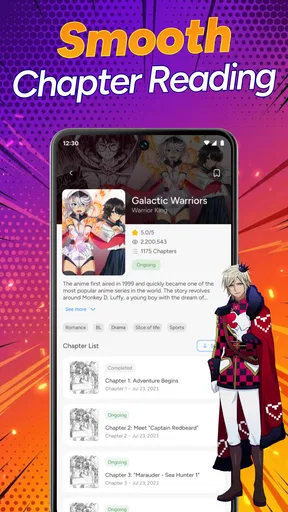
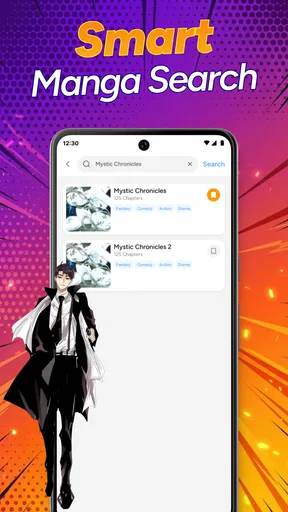
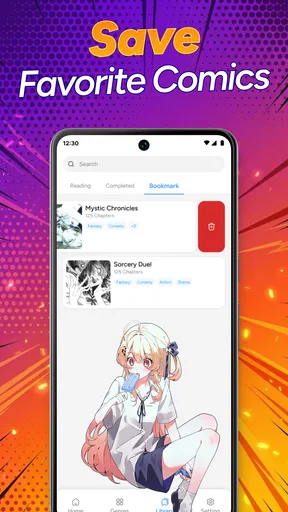
Our Review of StoryToon: Manhwa, Manga Comic
 Analysis by Appyee
I spent time with StoryToon as a lightweight comics app, and its appeal became clearest in a shared-device situation. A phone or tablet can move between people in the same home, and a simple reader is often more useful than a crowded entertainment app when someone wants a quick chapter before bed, during a commute, or while waiting for an appointment. StoryToon focuses on manhwa and manga reading rather than trying to become an all-purpose media platform, which gives it a straightforward place in a household’s app collection.
The app is free, carries an Everyone content rating, and is listed in the Comics category. That combination makes it easy to consider for a family tablet or a personal device used by different age groups. Still, an age label should not replace a parent’s own judgement about individual stories. Comic catalogs can contain very different themes even when an app is broadly presented for everyone, so I would still look at what a younger reader is opening before handing over a shared screen.
How StoryToon fits into a shared household
My first impression was that StoryToon works best when the goal is immediate reading rather than complicated account management. One person can pick up the device, open the app, and browse for something to read without needing a long setup ritual. That matters in homes where a tablet is passed from one reader to another and nobody wants to spend several minutes restoring a previous activity or changing a collection of settings.
The trade-off is that a shared device can blur personal boundaries. A reader may leave a story open, and the next person could see what was being read or continue from the same place. I would not treat the app as a private library for several people unless each user is comfortable with that arrangement. If separate reading histories, profiles, or protected spaces are important to your household, you should choose a service that clearly centers those tools instead of assuming a simple comics reader will provide them.
A practical routine helps. I would keep one reading session open only while the device is in use, then return to the browsing screen before passing it on. That small habit reduces accidental spoilers and makes the next person less likely to enter the wrong chapter. It is also useful when one family member reads vertically formatted manhwa and another prefers manga pages, because the handoff becomes less confusing when the previous reader does not leave a specific panel on screen.
StoryToon is especially suitable for a household that shares one tablet casually, with people taking turns rather than maintaining separate digital libraries. It is less convincing for a home where every reader expects a personalized profile, independent recommendations, or carefully separated progress. Those expectations are not minor conveniences; they shape whether a shared reading app feels comfortable over time.
The first setup should establish simple boundaries
Because the app is free, there is little financial friction in trying it. That makes installation easy for a personal phone and also lowers the barrier for a family to test it on a common tablet. The practical question is not whether everyone can access it, but how the household wants that access to work. Before giving the device to a child, I would agree on when the app can be used and whether reading should happen only in a common area.
I also recommend deciding who is responsible for choosing stories. An Everyone rating is reassuring as a starting point, but it does not tell me that every title will suit every child, every sensitive reader, or every family standard. A younger reader may need help selecting material, while an older reader may reasonably want more independence. That is a household decision rather than something I would outsource entirely to the app’s category label.
For a shared tablet, a short handoff rule is more valuable than a complicated process: finish a chapter, close the reader, and leave the device where the next person can find it. If the app opens directly into a story, the next user can quickly understand whose turn it is. If several people read at once, I would avoid assuming that one visible position represents everyone’s progress.
There is another boundary worth considering: reading time. Comics are easy to consume in small pieces, but a sequence of chapters can quietly extend a session. StoryToon’s simple presentation encourages quick access, which is good when I have ten minutes available, yet it also means the household needs its own stopping point. On a school night, a chapter limit or a fixed bedtime rule can prevent the app from becoming an argument about “just one more.”
Coordinating reading without turning it into administration
Coordination is where a shared-use plan either succeeds or becomes irritating. I would not create a formal schedule for casual reading, but I would reserve the device when someone has a longer session planned. This is particularly helpful if the same tablet is also used for homework, video calls, or other essential tasks. StoryToon may be a pleasant addition, but it should not silently take priority over the device’s main household purpose.
A simple family note can prevent duplicated effort: write down the title and chapter each person is reading, or use a paper bookmark beside the device. This is an old-fashioned solution, but it avoids guessing when the app does not provide the kind of separate progress system a household may want. It also helps prevent spoilers when one reader is several chapters ahead of another.
I found that the app makes more sense for independent browsing than for a group trying to manage one shared queue. If a parent wants to recommend a story, the easiest approach is to show the title directly and explain why it might suit the reader. I would not rely on everyone seeing the same home screen or expecting the app to organize a family reading list for them. The strength here is direct access, not household coordination software.
There is a useful trade-off in that simplicity. Fewer layers can mean less confusion for a first-time reader, especially someone who is not comfortable with complicated digital libraries. At the same time, a serious manga household may find the experience too basic if it wants detailed collections, synchronized progress across devices, or a carefully managed reading plan. In that situation, a dedicated comics service with stronger library tools would be the better choice, even if it takes longer to learn.
Age context matters more than the broad label
The Everyone rating makes StoryToon approachable for general household use, but I would interpret it as a starting point, not a personal recommendation for every reader. A child who is new to manga may need an adult to help distinguish a light story from one with themes they are not ready for. Older children and adults may prefer to browse independently, but they can still benefit from a clear agreement about what is acceptable on a shared screen.
Trust also works in both directions. Parents need confidence that a child can use the app responsibly, while older readers deserve enough privacy to enjoy their own material without constant inspection. On a shared device, those goals can conflict. I would solve that through separate device habits and conversation rather than pretending that a single comics app can create boundaries by itself.
For younger users, I would make the first few reading sessions collaborative. Sit together, inspect the available stories, and let the child explain what interests them. This is more useful than simply saying that the app is safe because of its age label. It also gives parents a chance to notice whether the reading layout is comfortable, whether the text is easy to follow, and whether the child understands how to move through a chapter.
For teenagers and adults, the main issue is not supervision but visibility. A person may not want the next user to see a personal reading choice or an unfinished scene. Returning to a neutral screen after reading is a small courtesy that makes a shared device feel less intrusive. If privacy is a major concern, I would use a personal device or pick an alternative with explicit account separation.
Reading comfort and everyday use
In everyday use, StoryToon is easiest to appreciate in short, focused sessions. I can imagine using it during a lunch break, on public transport, or in the evening when I want a comic rather than a long video. The app’s identity as a manga reader keeps the task clear: find a story, read, and stop when the time is up. That directness is more appealing than an entertainment app that surrounds reading with unrelated recommendations and distractions.
It also suits a shared living room tablet because comics are naturally quiet. One person can read while others talk or watch television, and the device does not demand audio. That makes it a considerate option for a household with different schedules. A child can read nearby without taking over the room, while an adult can use the same device later without setting up another entertainment system.
Still, screen comfort depends on the device. A small phone may be convenient for a quick session but tiring for dense manga pages, while a larger tablet is more comfortable but more likely to be shared. I would test the app on the device where it will actually be used rather than assuming that a pleasant experience on one screen will transfer perfectly to another. The best household setup may be a personal phone for regular reading and a tablet for occasional shared browsing.
One non-obvious advantage of a simple reader is that it can reduce decision fatigue. When several people share a device, nobody wants to reorganize a complicated library before reading. StoryToon’s focused purpose makes spontaneous use easier. The corresponding weakness is that a reader with a large, carefully organized collection may miss the structure offered by more mature alternatives. Convenience at the beginning can become limitation once the library grows.
What the app’s reach suggests, and what it does not solve
StoryToon has passed 100 thousand installs, so it is not an obscure experiment that only a handful of people have tried. Its average rating is 3.7, which feels consistent with an app that attracts interest but may not satisfy every expectation. I read that combination as a reason to approach it with realistic goals: try it for its simple comics-reading role, but do not assume it will replace every established manga platform.
The developer is SHOPPERBEATS, and the current release is version 1.0.2. The app requires Android 10 or newer, which is important when a household tablet is older or shared among several generations. I would check the device before planning a family reading station, because an otherwise suitable tablet may not meet that operating-system requirement. This is especially relevant when children use hand-me-down devices that are kept for years.
Its recent release also affects how I judge it. I am more forgiving of a focused first version when it handles its central reading task cleanly, but I would be cautious about building an elaborate household workflow around it immediately. If your family depends on advanced organization, long-term collection management, or polished multi-user behavior, an established alternative may be safer. If you mainly want a free way to explore manhwa and manga on a compatible device, trying StoryToon is a reasonable experiment.
Where it beats the usual alternatives
Compared with reading comics through a general web browser, a dedicated app feels more intentional. The device is already pointed toward stories, and the experience is less cluttered by unrelated tabs. That matters for a child who needs a clear starting point or for an adult who wants a short break without managing a browser session. StoryToon’s advantage is not that it transforms reading; it is that it keeps the purpose visible.
Compared with a large subscription-based comics platform, the free price removes a commitment barrier. A household can test the reading experience without adding another recurring entertainment expense. That is attractive when several people are curious but none of them knows whether the catalog or presentation will become part of their routine.
The compromise is depth. Larger services often justify their place through stronger discovery, account tools, reading synchronization, or a broader sense of library ownership. I would choose one of those alternatives if my priority were maintaining a substantial personal collection across devices. I would choose StoryToon when the priority were a low-friction, shared-device reading option that people can pick up casually.
Another alternative is physical manga. Paper volumes remain better for a screen-free bedtime, for collecting favorite editions, and for households that want a clearly owned object rather than a shared digital session. StoryToon wins on portability and immediate access, but it cannot replace the social and tactile aspects of a physical shelf. For many families, using both makes more sense than treating either one as a complete replacement.
Who should try it and who should skip it
I would recommend StoryToon to a reader who wants a free comics app for casual manhwa and manga discovery, especially on an Android device running version 10 or later. It is a sensible candidate for a shared tablet where people take turns, for a commuter who wants short reading sessions, or for a newcomer who does not want to learn a complicated library system before opening a story.
I would be more hesitant to recommend it to a collector who needs carefully separated accounts, dependable cross-device progress, or a highly organized archive. I would also skip it as the main family reading solution if a parent expects built-in controls to manage every age boundary or if several readers need private, independent spaces. In those cases, a more mature comics platform or separate personal devices would reduce friction.
My most useful tip is to treat it as a shared reading doorway rather than a complete household library. Keep the device’s reading routine simple, agree on age-appropriate choices, and use an external note or verbal handoff if several people are following different stories. That approach plays to the app’s strengths without asking it to perform account and family-management work it was not designed to replace.
My household verdict
After looking at StoryToon through the lens of shared use, I see a clear but limited role for it. It is approachable, free, and focused enough to make a common tablet useful for quiet reading. The Everyone rating helps it fit a broad audience, while the Android 10 requirement gives older devices a practical checkpoint before installation. Its appeal is strongest when the household values simplicity over detailed personalization.
I would install it for a family that wants to explore comics together but is comfortable handling boundaries through ordinary routines and conversation. I would not present it as a private multi-user library or as a substitute for a full-featured manga service. The average rating of 3.7 suggests that the experience will not be perfect for everyone, and the app’s relatively focused identity means expectations matter.
My final view is positive with sensible limits: StoryToon is worth trying when easy, free access to manhwa and manga matters more than advanced household organization. Use it on a compatible device, decide who can read what, and keep shared progress informal unless the app proves sufficient for your particular routine. For casual family access and quick personal sessions, that balance makes it a useful addition rather than an app I would ask to manage the entire home.
Verdict
Strengths of StoryToon: Manhwa, Manga Comic
- Large catalog of manhwa, manga, and webtoons in one app.
- Smooth vertical scrolling makes mobile reading comfortable.
- New chapters are added regularly for ongoing series.
- Personalized recommendations help discover similar comics.
- Reading progress syncs conveniently across supported devices.
Limitations of StoryToon: Manhwa, Manga Comic
- Some titles or chapters may require coins or a premium plan.
- Availability of comics can vary by region and licensing agreements.
- Advertisements may interrupt the free reading experience.
- Translation quality may differ between series and chapters.
- Offline reading options may be limited for some content.
Similar Picks in This Category
View All
WEBTOON: Manga, Comics, Manhwa
NAVER WEBTOON4.6

MangaToon: Comic & Manga
MangaToon4.3

네이버 웹툰 - Naver Webtoon
NAVER WEBTOON4.3

Tapas – Comics and Novels
Tapas Entertainment Inc.4.2

Lezhin Comics - Daily Releases
LEZHIN ENTERTAINMENT3.3

WebComics - Webtoon & Manga
WEBCOMICS HOLDINGS HK LIMITED4.4
Frequently Asked Questions
What is StoryToon: Manhwa, Manga Comic?
StoryToon: Manhwa, Manga Comic is a mobile reading app focused on digital comics, including manhwa, manga, webtoons, and other illustrated stories. Its catalog is organized by genres and reading preferences, allowing users to discover romance, fantasy, action, drama, and more. The app is designed for readers who want convenient access to serialized comic content on an Android or iOS device.
Is StoryToon: Manhwa, Manga Comic free to download and use?
The application can generally be downloaded without an upfront charge, but access to every story, chapter, or reading feature may depend on the app’s current monetization system. Some content may be available for free, while other chapters can require advertisements, in-app currency, subscriptions, or individual purchases. Check the store listing and in-app pricing before spending money.
Does StoryToon: Manhwa, Manga Comic require an internet connection?
An internet connection is normally needed to browse the catalog, load story pages, synchronize reading progress, and access newly released chapters. Depending on the version and title, some content may be temporarily cached or available for offline reading, but users should not assume that every comic can be downloaded. Availability of offline features can also vary by device, region, and account.
Is StoryToon: Manhwa, Manga Comic suitable for children?
The app may include stories aimed at different age groups, and some titles can contain romance, violence, mature themes, suggestive scenes, or emotionally intense situations. Parents should review the application’s age rating, content descriptions, privacy settings, and individual comic summaries before allowing children to use it. In-app purchases and advertising should also be restricted when appropriate.
What should I check before downloading StoryToon: Manhwa, Manga Comic?
Before installing StoryToon, review the required Android or iOS version, storage needs, supported language, privacy permissions, and the availability of its catalog in your country. It is also worth checking whether your preferred chapters require coins, advertisements, or a subscription. Read recent store reviews as well, since content availability, pricing, and performance can change after updates.
